星期三, 2月 15, 2006

Traditional Chinese Medicine in the Treatment of Patients with Ankylosing Spondylitis: A Randomized Case-Control Pilot Study.
中藥方劑治療僵直性脊椎炎之先導性臨床試驗
魏正宗1、許清祥、游恆懿、謝長奇2、李采娟2、詹明修3
1中山醫學大學附設醫院過敏免疫風濕科、中藥臨床試驗中心;2中國醫藥大學中西結合研究所;3中山醫學大學醫學系微免科
Background. There are still many unmet needs in the treatment of ankylosing spondylitis (AS) among present therapies including non-steroid anti-inflammatory drugs (NSAID), disease-modifying anti-rheumatic drugs (DMARD), thalidomide and anti-tumor necrosis factor (TNF a).
Aim. To exploratorily test TCM formulas in the treatment of patients with AS.
Methods. Sixty AS patients were enrolled in this 12 weeks’ trial. Thirty-six patients with active AS, defined by Bath Ankylosing Spondylitis Disease Activity Index (BASDAI) > 3 cm in spite of 6 weeks’ NSAID treatment, were randomized to receive same NSAID alone, sulfasalazine add-on or TCM formula 小活絡丹 add-on. The other 24 patients with inactive late-stage AS, defined by BASDAI < 3 and Bath Ankylosing Spondylitis Functional Index (BASFI) > 2 cm, were randomized to receive龜鹿二仙膠 or左歸丸. Primary endpoint was the ASAS response criteria in intend-to-treat analysis. Secondary endpoints were BASDAI, BASFI, Bath Ankylosing Spondylitis Global Index (BAS-G), quality-of-life (QOL), ESR, HS-CRP and IgA. Cytokines level, including TNFa, IL-10 and TGFb in serum or peripheral blood mononuclear cell culture supernatant, were assayed by ELISA.
Results. Fifty-six patients completed this 12 weeks’ trial. Four patients dropped out due to poor compliance. In the active AS patients, 33.33% of NSAID arm, 41.67% of sulfasalazine arm, and 16.67% of小活絡丹 arm fit the ASAS response criteria. In the inactive AS patients, 8.3% of龜鹿二仙膠 and 25% of 左歸丸 reach the ASAS response criteria. Patients with左歸丸 got significant improvement in BASFI (p=0.018)and QOL score(p=0.024) but not BASDAI, ESR, HS-CRP, IgA. No significant differences were found in the cytokines level. No significant adverse events were found in all TCM groups.
Conclusions. In active AS patients, NSAID and sulfasalazine were superior than小活絡丹. In inactive AS patients, 左歸丸 revealed promising benefit. Further double blind placebo controlled trials are necessary.
魏正宗1、許清祥、游恆懿、謝長奇2、李采娟2、詹明修3
1中山醫學大學附設醫院過敏免疫風濕科、中藥臨床試驗中心;2中國醫藥大學中西結合研究所;3中山醫學大學醫學系微免科
Background. There are still many unmet needs in the treatment of ankylosing spondylitis (AS) among present therapies including non-steroid anti-inflammatory drugs (NSAID), disease-modifying anti-rheumatic drugs (DMARD), thalidomide and anti-tumor necrosis factor (TNF a).
Aim. To exploratorily test TCM formulas in the treatment of patients with AS.
Methods. Sixty AS patients were enrolled in this 12 weeks’ trial. Thirty-six patients with active AS, defined by Bath Ankylosing Spondylitis Disease Activity Index (BASDAI) > 3 cm in spite of 6 weeks’ NSAID treatment, were randomized to receive same NSAID alone, sulfasalazine add-on or TCM formula 小活絡丹 add-on. The other 24 patients with inactive late-stage AS, defined by BASDAI < 3 and Bath Ankylosing Spondylitis Functional Index (BASFI) > 2 cm, were randomized to receive龜鹿二仙膠 or左歸丸. Primary endpoint was the ASAS response criteria in intend-to-treat analysis. Secondary endpoints were BASDAI, BASFI, Bath Ankylosing Spondylitis Global Index (BAS-G), quality-of-life (QOL), ESR, HS-CRP and IgA. Cytokines level, including TNFa, IL-10 and TGFb in serum or peripheral blood mononuclear cell culture supernatant, were assayed by ELISA.
Results. Fifty-six patients completed this 12 weeks’ trial. Four patients dropped out due to poor compliance. In the active AS patients, 33.33% of NSAID arm, 41.67% of sulfasalazine arm, and 16.67% of小活絡丹 arm fit the ASAS response criteria. In the inactive AS patients, 8.3% of龜鹿二仙膠 and 25% of 左歸丸 reach the ASAS response criteria. Patients with左歸丸 got significant improvement in BASFI (p=0.018)and QOL score(p=0.024) but not BASDAI, ESR, HS-CRP, IgA. No significant differences were found in the cytokines level. No significant adverse events were found in all TCM groups.
Conclusions. In active AS patients, NSAID and sulfasalazine were superior than小活絡丹. In inactive AS patients, 左歸丸 revealed promising benefit. Further double blind placebo controlled trials are necessary.
星期日, 2月 12, 2006
高尿酸 痛風病患可吃豆類香菇菠菜葡萄酒
近期具公信力的醫學研究顯示,香菇、蘆筍、菠菜等高普林蔬菜和葡葡酒不會影響尿酸,乳製品和豆類有助降低尿酸,這些食物長期名列痛風黑名單食物上;現在獲得平反,患者不必對這些食物敬而遠之。
哈佛醫學院麻省總醫院的Hyon Choi醫生在最近的 「關節炎與風濕症」期刊(Arthritis & Rheumatism) 發表一篇大規模的研究,調查一萬四千多人飲食與血中尿酸的關係。
中山醫學大學附設醫院過敏免疫風濕科主治醫師魏正宗指出,這項結果發現吃大量肉類的人,尿酸平均增加值,是吃大量海鮮類者的三倍,每天喝牛奶和每二天吃優格的人尿酸降低,至於蛋白質攝取量與尿酸無關。
在二00四年新英格蘭醫學期刊中,Choi醫生也曾發表研究指出,只有肉類、海鮮及酒類,才會增加痛風的機率,高普林蔬菜以及葡萄酒並不會影響尿酸。 魏正宗指出,痛風是高尿酸血症的併發症之一,人體可以把海鮮、肉類、動物內臟、啤酒代謝為一種叫做普林(或稱「嘌呤」,purine)的物質;再進一步代謝就是尿酸。
魏正宗指出,過去是計算食物的普林含量,把肉類 、海鮮、酒類和香菇、蘆筍、菠菜、豆類及其製品一概 打入痛風和高尿酸黑名單食物內;然而,經由人體消化普林的實證研究顯示,植物性的普林並不會影響尿酸,葡萄酒中的抗氧化物質也抵消酒類對尿酸的不利影響。
中華民國營養師公會理事長金惠民指出,過去認為植物性普林對尿酸的影響有待商榷,現在對痛風的飲食建議是控制肉類蛋白質攝取量、多喝水、青菜水果營養均衡,至於衛生署網站仍把高普林蔬菜列入痛風禁忌飲食,則需要醫界和營養界再討論決定如何修正。
長久以來,痛風和高尿酸病人苦惱不知如何選擇食物,會求助保健食品,中山醫學大學附設醫院正在進行 一項降尿酸的全榖類及中草藥保健食品的臨床試驗,歡迎有興趣的人加入。
[中央社] [2005-01-14 12:30:27]
哈佛醫學院麻省總醫院的Hyon Choi醫生在最近的 「關節炎與風濕症」期刊(Arthritis & Rheumatism) 發表一篇大規模的研究,調查一萬四千多人飲食與血中尿酸的關係。
中山醫學大學附設醫院過敏免疫風濕科主治醫師魏正宗指出,這項結果發現吃大量肉類的人,尿酸平均增加值,是吃大量海鮮類者的三倍,每天喝牛奶和每二天吃優格的人尿酸降低,至於蛋白質攝取量與尿酸無關。
在二00四年新英格蘭醫學期刊中,Choi醫生也曾發表研究指出,只有肉類、海鮮及酒類,才會增加痛風的機率,高普林蔬菜以及葡萄酒並不會影響尿酸。 魏正宗指出,痛風是高尿酸血症的併發症之一,人體可以把海鮮、肉類、動物內臟、啤酒代謝為一種叫做普林(或稱「嘌呤」,purine)的物質;再進一步代謝就是尿酸。
魏正宗指出,過去是計算食物的普林含量,把肉類 、海鮮、酒類和香菇、蘆筍、菠菜、豆類及其製品一概 打入痛風和高尿酸黑名單食物內;然而,經由人體消化普林的實證研究顯示,植物性的普林並不會影響尿酸,葡萄酒中的抗氧化物質也抵消酒類對尿酸的不利影響。
中華民國營養師公會理事長金惠民指出,過去認為植物性普林對尿酸的影響有待商榷,現在對痛風的飲食建議是控制肉類蛋白質攝取量、多喝水、青菜水果營養均衡,至於衛生署網站仍把高普林蔬菜列入痛風禁忌飲食,則需要醫界和營養界再討論決定如何修正。
長久以來,痛風和高尿酸病人苦惱不知如何選擇食物,會求助保健食品,中山醫學大學附設醫院正在進行 一項降尿酸的全榖類及中草藥保健食品的臨床試驗,歡迎有興趣的人加入。
[中央社] [2005-01-14 12:30:27]
訂閱:
文章 (Atom)
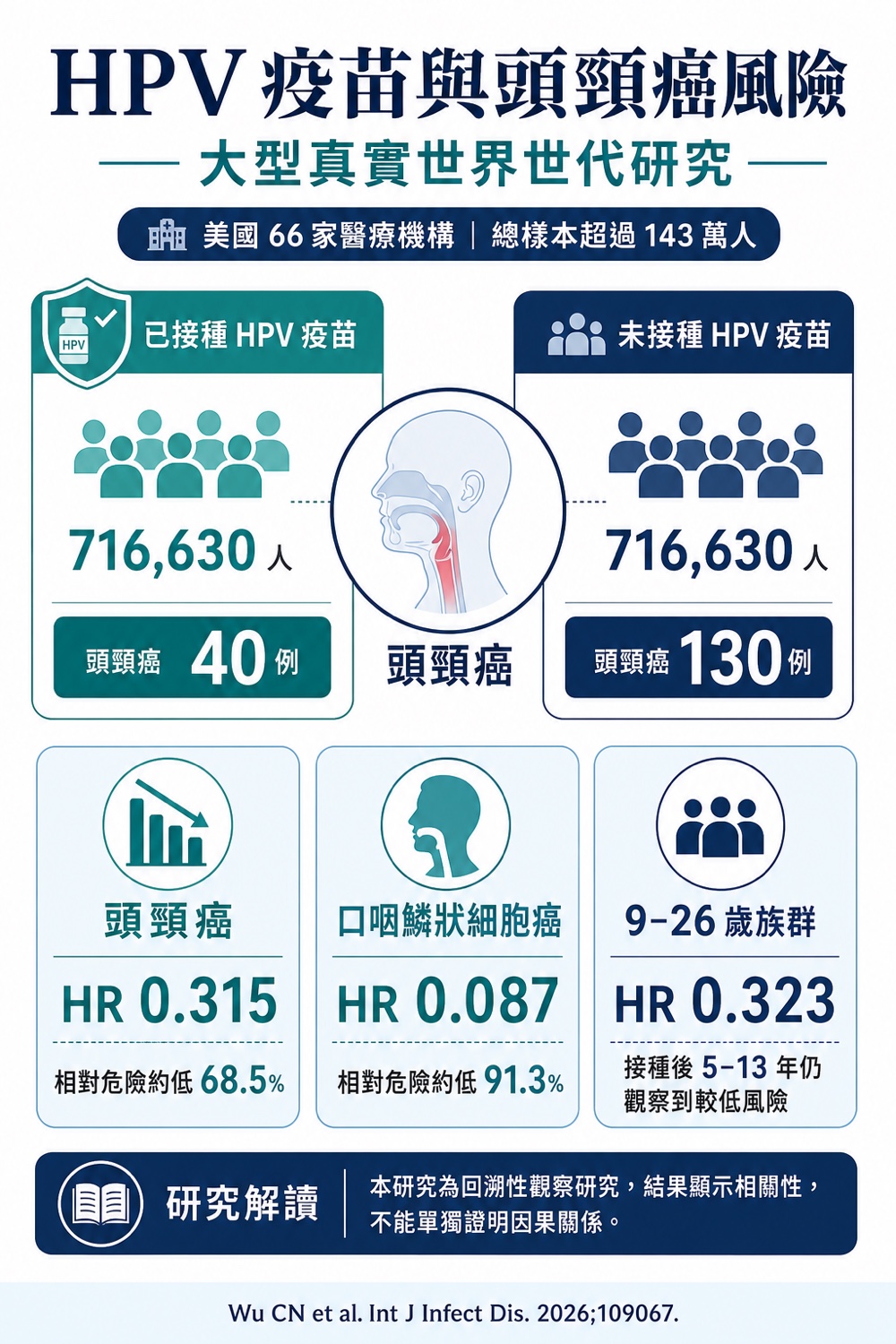
HPV 疫苗是否能在真實世界中降低頭頸癌發生
很高興分享我們團隊最新發表於《International Journal of Infectious Diseases》的研究成果。 HPV 是口咽癌等頭頸癌的重要致病因子,但 HPV 疫苗是否能在真實世界中降低頭頸癌發生,過去仍缺乏大規模研究證據。 本研究分析美國 66 家醫療...