(中央社記者郝雪卿台中市八日電)一名經常進出大陸的吳姓台商,近幾個月來手腳關節常發生莫名其妙的酸痛,有時甚至腫得像香腸一樣,早上起床也覺得腰背酸痛僵硬,尿酸值檢驗並無明顯異常,經中山醫學大學附設醫院主治醫師魏正宗診斷,才確認是得了「非典型脊椎關節炎」。
中山醫學大學附設醫院過敏免疫風濕科主治醫師魏正宗今天說,非典型脊椎關節炎與僵直性脊椎炎、萊特氏症候群、乾癬性關節炎等疾病,總稱為」血清陰性脊椎關節炎」 (spondyloarthropathy)。脊椎關節炎的主要典型症狀是:慢性下背痛、起床腰背僵硬、運動過後症狀減輕,有時造成手腳關節炎、足底筋膜炎及跟腱炎,較不典型症狀包括香腸指、黏膜潰瘍、皮膚乾癬、眼睛葡萄膜炎、血尿等。
魏正宗表示,脊椎關節炎是一種不少見卻很容易被誤診的風濕病,台灣的脊椎關節炎盛行率估計為1 %,發病年齡為十六至四十歲,男女比例為三:一。這種疾病與HLA-B27基因有強烈關聯及遺傳傾向,是一種自體免疫疾病。
他強調,凡是有長期下背痛、反覆性無法解釋的關節炎、胸痛或脊椎僵硬、肌腱韌帶與骨骼交接處的發炎、眼睛葡萄膜炎、乾癬等任一情況,特別是有家族病史或HLA-B27基因陽性的人,都應懷疑是脊椎關節炎,必須找風濕免疫科醫師詳細診斷及治療。目前已有新一代的非類固醇類消炎止痛藥、免疫調節劑、抗腫瘤壞死因子療法等可以改善並控制病情。
星期三, 2月 15, 2006

Traditional Chinese Medicine in the Treatment of Patients with Ankylosing Spondylitis: A Randomized Case-Control Pilot Study.
中藥方劑治療僵直性脊椎炎之先導性臨床試驗
魏正宗1、許清祥、游恆懿、謝長奇2、李采娟2、詹明修3
1中山醫學大學附設醫院過敏免疫風濕科、中藥臨床試驗中心;2中國醫藥大學中西結合研究所;3中山醫學大學醫學系微免科
Background. There are still many unmet needs in the treatment of ankylosing spondylitis (AS) among present therapies including non-steroid anti-inflammatory drugs (NSAID), disease-modifying anti-rheumatic drugs (DMARD), thalidomide and anti-tumor necrosis factor (TNF a).
Aim. To exploratorily test TCM formulas in the treatment of patients with AS.
Methods. Sixty AS patients were enrolled in this 12 weeks’ trial. Thirty-six patients with active AS, defined by Bath Ankylosing Spondylitis Disease Activity Index (BASDAI) > 3 cm in spite of 6 weeks’ NSAID treatment, were randomized to receive same NSAID alone, sulfasalazine add-on or TCM formula 小活絡丹 add-on. The other 24 patients with inactive late-stage AS, defined by BASDAI < 3 and Bath Ankylosing Spondylitis Functional Index (BASFI) > 2 cm, were randomized to receive龜鹿二仙膠 or左歸丸. Primary endpoint was the ASAS response criteria in intend-to-treat analysis. Secondary endpoints were BASDAI, BASFI, Bath Ankylosing Spondylitis Global Index (BAS-G), quality-of-life (QOL), ESR, HS-CRP and IgA. Cytokines level, including TNFa, IL-10 and TGFb in serum or peripheral blood mononuclear cell culture supernatant, were assayed by ELISA.
Results. Fifty-six patients completed this 12 weeks’ trial. Four patients dropped out due to poor compliance. In the active AS patients, 33.33% of NSAID arm, 41.67% of sulfasalazine arm, and 16.67% of小活絡丹 arm fit the ASAS response criteria. In the inactive AS patients, 8.3% of龜鹿二仙膠 and 25% of 左歸丸 reach the ASAS response criteria. Patients with左歸丸 got significant improvement in BASFI (p=0.018)and QOL score(p=0.024) but not BASDAI, ESR, HS-CRP, IgA. No significant differences were found in the cytokines level. No significant adverse events were found in all TCM groups.
Conclusions. In active AS patients, NSAID and sulfasalazine were superior than小活絡丹. In inactive AS patients, 左歸丸 revealed promising benefit. Further double blind placebo controlled trials are necessary.
魏正宗1、許清祥、游恆懿、謝長奇2、李采娟2、詹明修3
1中山醫學大學附設醫院過敏免疫風濕科、中藥臨床試驗中心;2中國醫藥大學中西結合研究所;3中山醫學大學醫學系微免科
Background. There are still many unmet needs in the treatment of ankylosing spondylitis (AS) among present therapies including non-steroid anti-inflammatory drugs (NSAID), disease-modifying anti-rheumatic drugs (DMARD), thalidomide and anti-tumor necrosis factor (TNF a).
Aim. To exploratorily test TCM formulas in the treatment of patients with AS.
Methods. Sixty AS patients were enrolled in this 12 weeks’ trial. Thirty-six patients with active AS, defined by Bath Ankylosing Spondylitis Disease Activity Index (BASDAI) > 3 cm in spite of 6 weeks’ NSAID treatment, were randomized to receive same NSAID alone, sulfasalazine add-on or TCM formula 小活絡丹 add-on. The other 24 patients with inactive late-stage AS, defined by BASDAI < 3 and Bath Ankylosing Spondylitis Functional Index (BASFI) > 2 cm, were randomized to receive龜鹿二仙膠 or左歸丸. Primary endpoint was the ASAS response criteria in intend-to-treat analysis. Secondary endpoints were BASDAI, BASFI, Bath Ankylosing Spondylitis Global Index (BAS-G), quality-of-life (QOL), ESR, HS-CRP and IgA. Cytokines level, including TNFa, IL-10 and TGFb in serum or peripheral blood mononuclear cell culture supernatant, were assayed by ELISA.
Results. Fifty-six patients completed this 12 weeks’ trial. Four patients dropped out due to poor compliance. In the active AS patients, 33.33% of NSAID arm, 41.67% of sulfasalazine arm, and 16.67% of小活絡丹 arm fit the ASAS response criteria. In the inactive AS patients, 8.3% of龜鹿二仙膠 and 25% of 左歸丸 reach the ASAS response criteria. Patients with左歸丸 got significant improvement in BASFI (p=0.018)and QOL score(p=0.024) but not BASDAI, ESR, HS-CRP, IgA. No significant differences were found in the cytokines level. No significant adverse events were found in all TCM groups.
Conclusions. In active AS patients, NSAID and sulfasalazine were superior than小活絡丹. In inactive AS patients, 左歸丸 revealed promising benefit. Further double blind placebo controlled trials are necessary.
訂閱:
文章 (Atom)
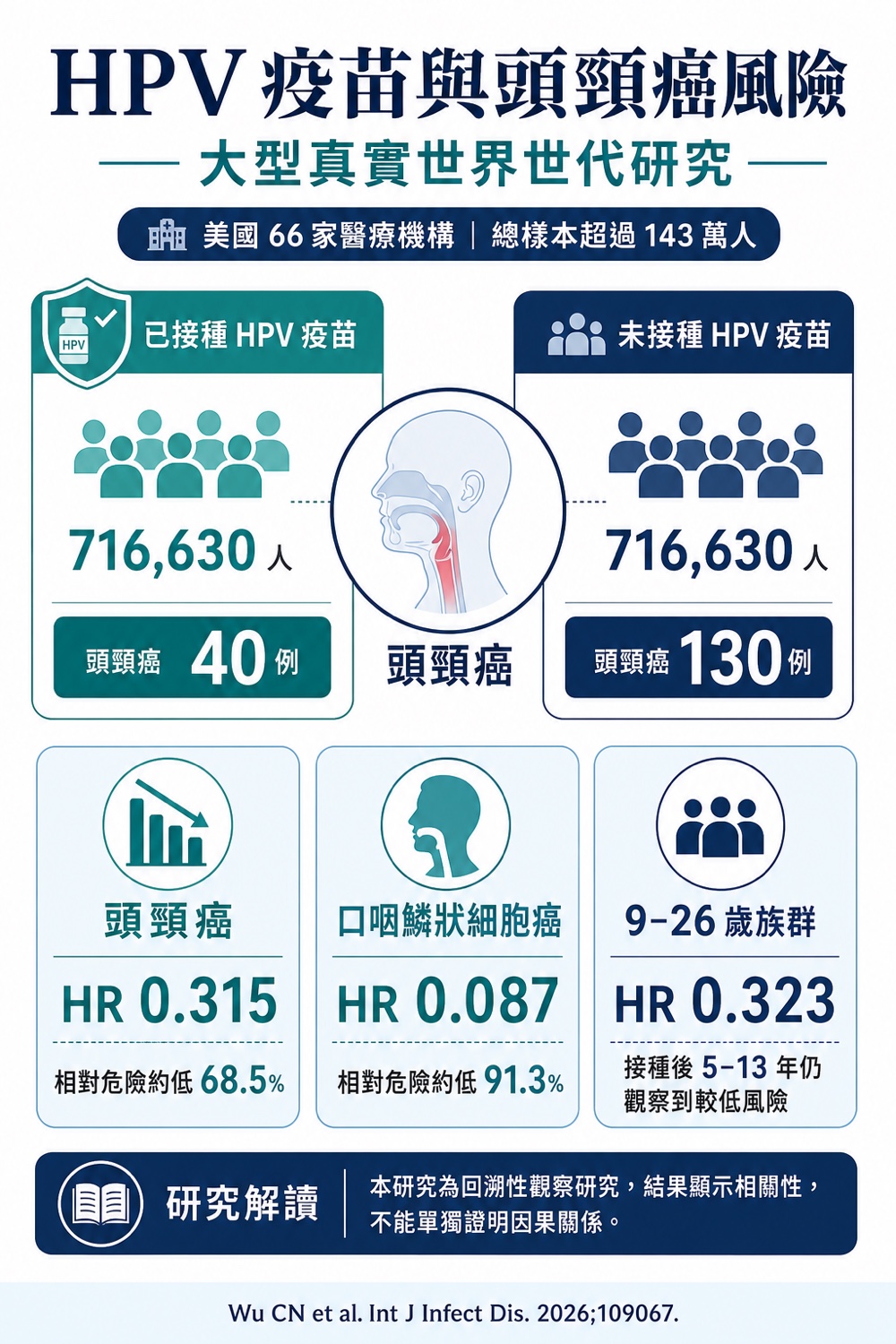
HPV 疫苗是否能在真實世界中降低頭頸癌發生
很高興分享我們團隊最新發表於《International Journal of Infectious Diseases》的研究成果。 HPV 是口咽癌等頭頸癌的重要致病因子,但 HPV 疫苗是否能在真實世界中降低頭頸癌發生,過去仍缺乏大規模研究證據。 本研究分析美國 66 家醫療...